
What Causes Piles? Common Causes and Risk Factors
Piles, also known as haemorrhoids, are swollen and inflamed veins in and around the anus and lower rectum. They are common and can affect people of different ages.
But what causes piles in the first place?
Piles usually develop when increased pressure is placed on the veins around the anus or lower rectum. Straining during bowel movements, constipation, prolonged sitting on the toilet, a low-fibre diet, pregnancy, ageing and regularly lifting heavy objects can increase the risk.
Understanding the causes of piles can help you identify risk factors early and make lifestyle changes that may reduce symptoms and recurrence.
What Causes Piles?
There is not always one single cause of piles. They can develop when pressure on the veins around the anus increases over time.
Some of the most common causes and contributing factors include:
1. Straining During Bowel Movements
Repeatedly pushing hard while passing stool increases pressure in the veins of the lower rectum and anus.
This is particularly common in people who have constipation or hard stools. Over time, repeated straining can contribute to the development or worsening of piles.
If you regularly experience constipation, improving your bowel habits and increasing fibre and fluid intake may help make stools easier to pass.
2. Chronic Constipation
Constipation is one of the common factors associated with piles.
When stools are hard or difficult to pass, you may spend more time on the toilet and strain more during bowel movements. Both can increase pressure around the rectal veins.
If constipation is a recurring problem, it is important to address the underlying bowel habits rather than repeatedly ignoring the symptoms.
3. Spending Too Long on the Toilet
Sitting on the toilet for prolonged periods can increase pressure on the veins around the anus.
Using your phone or reading while sitting on the toilet can make it easy to spend much longer than necessary.
Try to avoid unnecessarily long toilet sessions and respond to the urge to pass stool without excessive delay.
4. A Low-Fibre Diet
A diet that is low in fibre can contribute to harder stools and constipation.
Fibre helps add bulk to stool and can make it softer and easier to pass. Foods such as fruits, vegetables, whole grains and legumes can help increase dietary fibre.
If you already have piles or frequently experience constipation, discuss an appropriate fibre intake with your doctor or dietitian.
5. Chronic Diarrhoea
Piles are not associated only with constipation.
Long-lasting or recurrent diarrhoea can also irritate the anal area and contribute to symptoms. Frequent bowel movements and repeated wiping or cleaning may further irritate the area.
Persistent diarrhoea should be evaluated to identify and treat its underlying cause.
6. Pregnancy
Pregnancy can increase the likelihood of developing piles.
As the pregnancy progresses, increased pressure in the pelvic area can affect the veins around the anus. Hormonal changes and constipation during pregnancy can also contribute.
Piles during pregnancy are common, but persistent bleeding, significant pain or other concerning symptoms should be discussed with a healthcare professional.
7. Ageing
The tissues that support the veins in the anus and lower rectum can become weaker with age.
This can make the veins more likely to stretch and swell, increasing the risk of haemorrhoids.
8. Regular Heavy Lifting
Repeated heavy lifting can increase pressure inside the abdomen and may contribute to pressure on the veins around the rectum.
People who regularly perform heavy physical work or weight training should use appropriate lifting techniques and avoid unnecessarily holding their breath while lifting.
9. Being Overweight
Being overweight may increase the risk of developing haemorrhoids because of increased pressure on the veins in the lower rectal and anal region.
Maintaining a healthy weight, staying physically active and preventing constipation can be useful parts of overall bowel health.
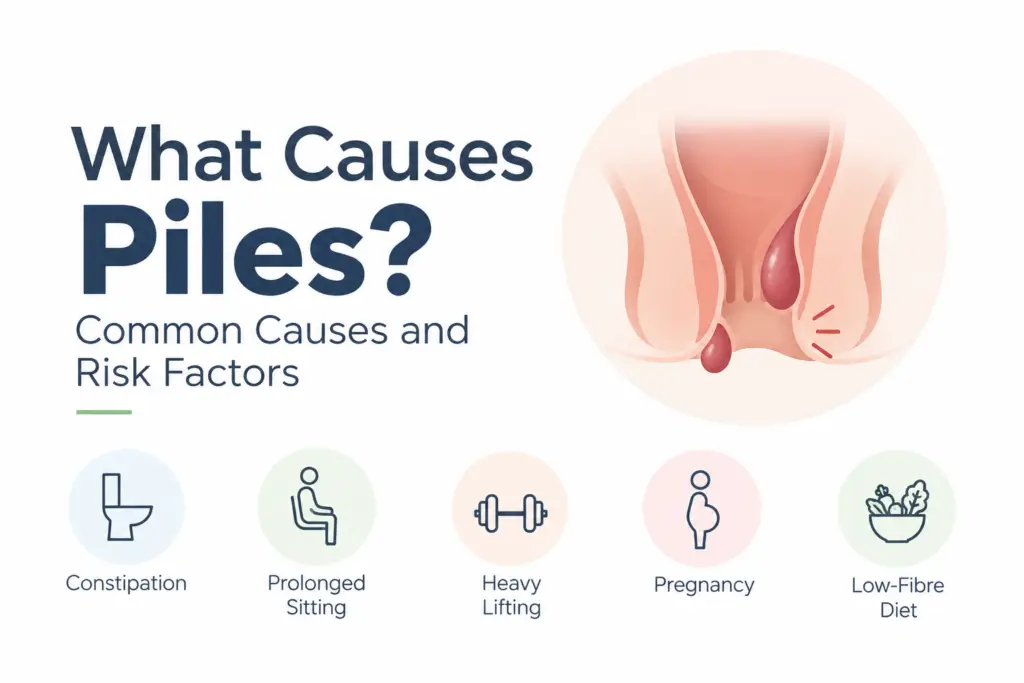
Piles Risk Factors
Several factors can make a person more likely to develop piles.
Common risk factors for piles include:
- Frequent constipation
- Repeated straining during bowel movements
- Chronic diarrhoea
- Low-fibre diet
- Spending a long time sitting on the toilet
- Pregnancy
- Increasing age
- Being overweight
- Regular heavy lifting
- Poor bowel habits
Having one or more risk factors does not necessarily mean that you will develop piles. However, reducing avoidable risk factors may help support better bowel health.
Can Lifestyle Habits Make Piles Worse?
Yes. Certain everyday habits can increase pressure or irritation around the anal area.
For example, repeatedly straining to pass stool, sitting on the toilet for long periods and having a diet low in fibre can contribute to problems associated with piles.
Simple changes such as eating enough fibre, drinking adequate fluids, staying active and avoiding unnecessary straining can help reduce constipation and may help prevent piles or reduce their symptoms.
How Can You Reduce Your Risk of Piles?
You cannot always prevent piles, but several habits may reduce your risk.
Eat More Fibre
Include fibre-rich foods such as:
- Fruits
- Vegetables
- Whole grains
- Beans and legumes
Fibre can help make stools softer and easier to pass. Increase fibre gradually if your current intake is low.
Drink Enough Fluids
Adequate fluid intake can support softer stools, particularly when you increase your fibre intake.
Your individual fluid needs can vary depending on factors such as your health, activity level and climate.
Avoid Excessive Straining
Try not to force bowel movements. Straining increases pressure on the veins around the anus and lower rectum.
Don’t Sit on the Toilet for Too Long
Go when you need to, but avoid unnecessarily prolonged toilet sessions.
Stay Physically Active
Regular physical activity can help support healthy bowel movements and reduce constipation.
When Should You See a Doctor for Piles?
Not every anal symptom is caused by piles.
Rectal bleeding, for example, can occur with haemorrhoids but may also be associated with other conditions. Therefore, persistent or unexplained bleeding should not automatically be assumed to be piles.
You should consider medical evaluation if:
- You have bleeding from the rectum
- Symptoms continue despite home care
- You have significant or persistent anal pain
- A lump around the anus is painful or does not improve
- Your bowel habits have changed
- You are unsure whether your symptoms are actually caused by piles
If you want to understand the symptoms that may indicate piles, read our guide on 10 Early Signs of Piles You Should Never Ignore.
For persistent symptoms, a proper examination can help determine the cause and appropriate treatment.
How Are Piles Diagnosed?
A doctor may diagnose piles based on your symptoms, medical history and physical examination.
External piles can often be identified by examining the area around the anus. Depending on your symptoms, a doctor may also perform a digital rectal examination or use an instrument to examine the anal canal and rectum.
Understanding whether you have internal or external piles can also help explain your symptoms. You can learn more in our guide to Internal vs External Piles: Symptoms, Differences & Treatment.
What Happens If Piles Become More Severe?
Piles can vary in severity. Internal haemorrhoids, for example, may progress from smaller prolapsing piles to more advanced stages.
Understanding the different grades can help you understand why treatment may differ from one person to another.
Read our detailed guide: Piles Grades 1, 2, 3 & 4: Symptoms, Differences & Treatment.
Treatment for Piles
Treatment depends on the type, severity and symptoms of piles.
Mild symptoms may improve with measures such as increasing dietary fibre, drinking adequate fluids, avoiding straining and improving toilet habits. Some people may require medicines or medical procedures when symptoms persist or become more severe.
If your symptoms require medical treatment, you can learn more about Piles Treatment in Indore.
For suitable patients, laser-based procedures may also be considered as one of the treatment options. The appropriate treatment should be decided after an individual evaluation.
Learn more about Laser Piles Treatment in Indore.
Why Choose ProctoCare for Piles Treatment in Indore?
If you have recurring bleeding, pain, swelling, a lump around the anus or symptoms that are affecting your daily life, getting an appropriate medical evaluation can help determine the cause.
At ProctoCare, Indore, Dr. Sunil Kuril is a General Surgeon and Proctologist providing evaluation and treatment for anorectal conditions.
If you are looking for a Piles Doctor in Indore, consult a qualified doctor for an assessment rather than relying only on self-diagnosis.
Frequently Asked Questions
What is the main cause of piles?
There is not always one single cause. Increased pressure on the veins around the anus and lower rectum can contribute to piles. Common contributing factors include constipation, straining during bowel movements, prolonged toilet sitting, low fibre intake, pregnancy, ageing and heavy lifting.
Can constipation cause piles?
Yes. Constipation can lead to hard stools and repeated straining, which can increase pressure on the veins around the anus and lower rectum.
Does sitting on the toilet for too long cause piles?
Prolonged sitting on the toilet is associated with increased risk of haemorrhoids because it can increase pressure on the veins around the anus.
Can heavy lifting cause piles?
Regular heavy lifting may increase pressure and can be a contributing factor for haemorrhoids. Proper lifting technique is important, particularly if you regularly perform strenuous physical activity.
Can piles be caused by a low-fibre diet?
A low-fibre diet can contribute to constipation and harder stools, which may increase straining during bowel movements. Increasing fibre intake can help make stools softer and easier to pass.
Can piles go away on their own?
Some mild piles symptoms can improve with home care and lifestyle changes. However, persistent symptoms or rectal bleeding should be evaluated by a healthcare professional rather than assumed to be piles.
Does every case of rectal bleeding mean piles?
No. Although haemorrhoids can cause rectal bleeding, bleeding can also occur with other digestive or colorectal conditions. Unexplained or persistent rectal bleeding should be medically evaluated.
Conclusion
Piles can develop due to several factors rather than one single cause. Constipation, straining during bowel movements, prolonged toilet sitting, low fibre intake, pregnancy, ageing, heavy lifting and other factors can increase the likelihood of developing haemorrhoids.
The good news is that many risk factors can be addressed through healthier bowel habits, adequate fibre and fluid intake, regular physical activity and avoiding excessive straining.
However, if you experience persistent symptoms or rectal bleeding, don’t assume that piles are the only possible cause. A proper medical evaluation can help identify the condition and determine the appropriate treatment.
If you are experiencing symptoms of piles and are looking for evaluation or treatment in Indore, consult Dr. Sunil Kuril at ProctoCare for an appropriate medical assessment.
Medical Disclaimer
This article is intended for general educational purposes and should not replace an individual medical consultation. If you have persistent pain, significant bleeding, changes in bowel habits or other concerning symptoms, consult a qualified healthcare professional.